
Our story
Tunlaw exists because of a problem nobody was willing to name.
Somewhere along the way, the constraints of government and mission-driven work started to set the ceiling instead of the floor. Not because people stopped caring, but because the budgets were tight, the timelines were compressed, and the systems had been inherited three reorganizations ago. Under that kind of pressure, "good enough" started to feel like the only option.
But it isn't the only option. There are real people on the other end of every form, every portal, every system, every communication. When the work is unclear, or incomplete, or technically compliant but hard to use, those people feel it. They're the ones who struggle to file. Who can't access the benefit. Who walk away frustrated.
That's the problem Tunlaw was founded to solve — not by asking people to work harder within a system that fragments their effort, but by changing how the work is structured in the first place.
“I could understand the constraints. I could not accept the standard.”
How we operate
The challenge with most government and mission-driven work isn't talent. It's structure. One team designs. Another checks compliance. Another writes the content. Each does their piece well, and somewhere between the handoffs, the coherence fades. It's not a people problem — it's a sequencing problem that the traditional model creates.
Tunlaw was built to work differently. The team understanding the problem is the same team shaping the solution, checking compliance, and building the rationale your people will use long after we're gone. That's not a tagline — it's how every engagement actually runs.
How we're organized is described in detail on our How We Work page. What matters here is why: because the people on the other end deserve work that holds together, not work that was assembled from parts.
Where we are today
Tunlaw's work spans public-facing digital services, national awareness campaigns, accessibility strategy, program support, and technology modernization — delivered for civilian agencies including the IRS, DOJ, Treasury Department, and FinCEN, as well as defense and technical programs through the SeaPort Next Generation contract vehicle.
The scope keeps expanding because the approach is mission-agnostic. Whether the problem is a nationwide campaign that needs to reach 260 million people or a notice redesign that needs to reduce call volume, the method adapts. The standard doesn't change.
We're deepening our bench of specialists who operate across disciplines, without silos, with the end user visible in every decision. And we're expanding into new mission areas where the gap between what's being delivered and what the people on the other end actually need is widest.
-
Our mission
To raise the standard of government and mission-driven work by integrating the disciplines each mission requires into one function, so the work holds together, the compliance is built in, and the people being served get what they deserve.
-
Our Vision
A federal landscape where every agency, every program, and every mission-driven organization has the structural support to deliver work that the people on the other end can trust, use, and depend on.
About our founder, Caitlin Lawrence
Caitlin didn't come from one discipline, she came up through the space where design, accessibility, communications, and program execution overlap. That cross-discipline perspective is why she saw the handoff problem so clearly, and why the firm she built is structured to eliminate it.
In 2025, she was selected for the ACT-IAC Voyagers 2026 cohort, a program that brings together emerging leaders from across government and industry to shape the future of federal technology and service delivery. It's recognition of what Tunlaw has been building: a firm that doesn't just deliver against the standard, but pushes to raise it.
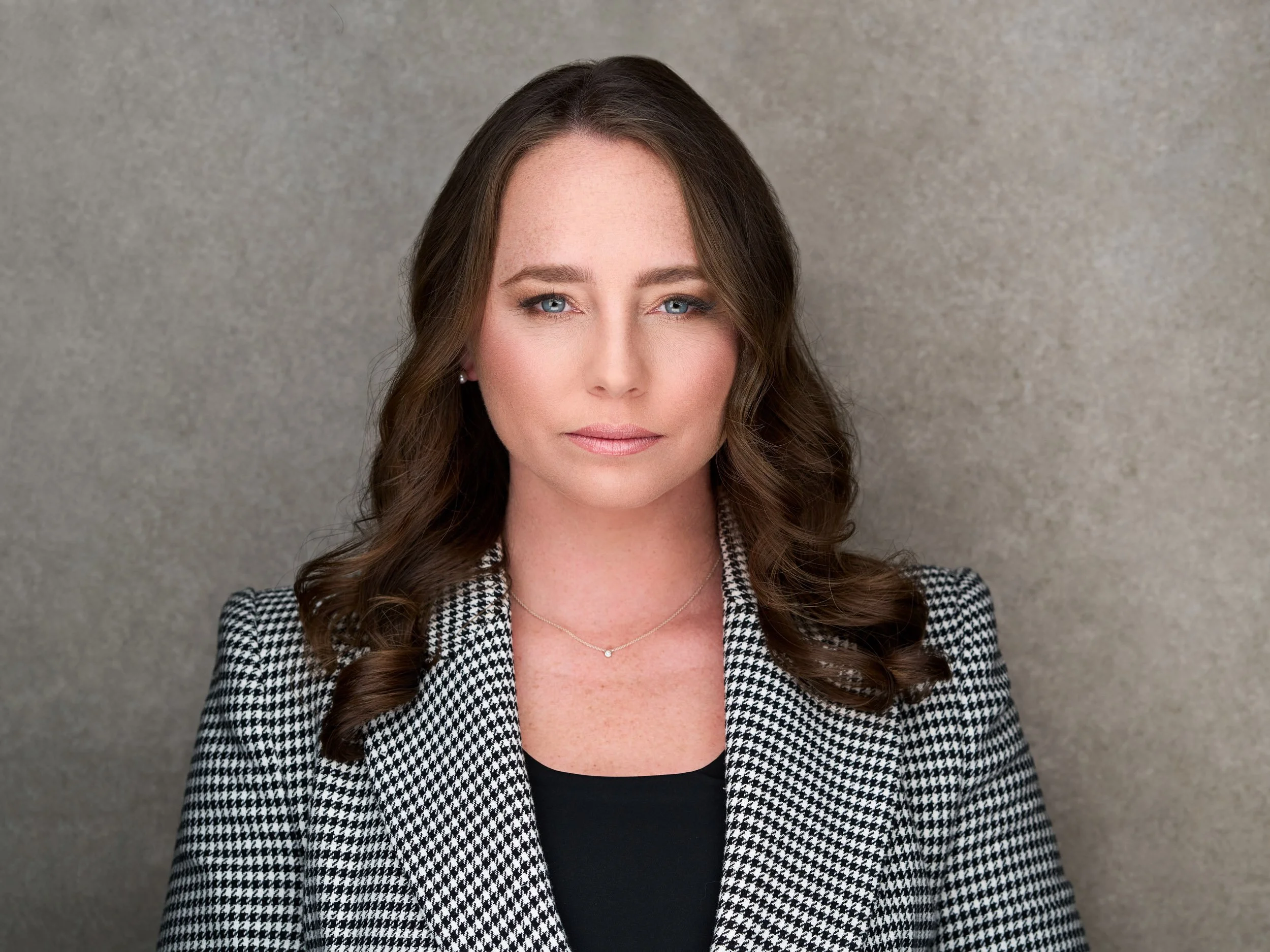
Founder, Caitlin Lawrence
Beyond the contract
The conviction that people deserve better doesn't stop at the boundary of a statement of work. In 2025, Tunlaw partnered with Bethesda Lactation and breadsoda to host Threads of Hope — a community clothing drive in Georgetown supporting Women Giving Back, a nonprofit that provides free clothing to women and children in crisis.
"It's about restoring dignity and confidence," Caitlin said at the event. "We believe in showing up for our neighbors, and this drive is a way to bring people together in service of something that truly matters."
The work matters because the people on the other end matter. That's true whether the "other end" is a federal agency or a family in need.
-
SBA-certified EDWOSB
Economically Disadvantaged Woman-Owned Small Business
-
SeaPort NxG
Navy and DoD contract vehicle
-
ACT-IAC Voyagers 2026
Emerging leaders in gov tech
-
DHS Trusted Tester
Staff is DHS Trusted Tester and International Association of Accessibility Professionals (IAAP) certified.